
SaitechLabs
Surface Coating Technology Solutions
The Hidden Masterpieces of the Big Temple
Unveiling the 1000-year-old engineering marvel of painting with lime on lime in the Great Brihadisvara Temple.
Discover the ScienceFor centuries, the world believed the paintings within the dark ambulatory passage (Pradakshina Patha) of the Brihadisvara Temple were solely from the Nayaka period (17th century).
It was only in the 1930s that S.K. Govindaswami discovered that the coarse Nayaka paintings were actually concealing a far superior, smoother layer beneath them. Flaking plaster revealed the vibrant, fluid lines of the Chola period (11th century), executed under the patronage of Raja Raja Chola I.
"The Chola frescoes are not just art; they are a chemical triumph. They stand as the only major examples of this specific hybrid lime technique in the history of Indian art."
Construction Completed
Two distinct layers: Chola (Lower) & Nayaka (Upper)
The debate between Buon Fresco (Wet) and Fresco Secco (Dry) ends here. The Chola artists mastered a middle ground.
True Fresco. Pigments mixed with water are applied to wet lime plaster.
Pigments mixed with a binder (gum, glue, or egg) are applied to dry plaster.
Pigments mixed with Lime Water applied to semi-dry or dry lime plaster.
The rough granite walls of the temple sanctum were chipped to create a "toothed" surface, ensuring the plaster would grip firmly.
A mixture of limestone, river sand, and fermented paddy husk. The fermentation of organic matter helped prevent cracks and increased adhesion.
A thin layer of extremely pure lime mixed with fine sand or marble dust. This was troweled to a high sheen, creating a smooth, white canvas.
A thin layer of extremely pure lime mixed with fine sand or marble dust. This was troweled to a high sheen, creating a smooth, white canvas.
Mineral pigments were ground and mixed with lime water. Applied to the surface while it was still receptive (semi-dry). As the lime water dried, it carbonized, locking the colors into the matrix.
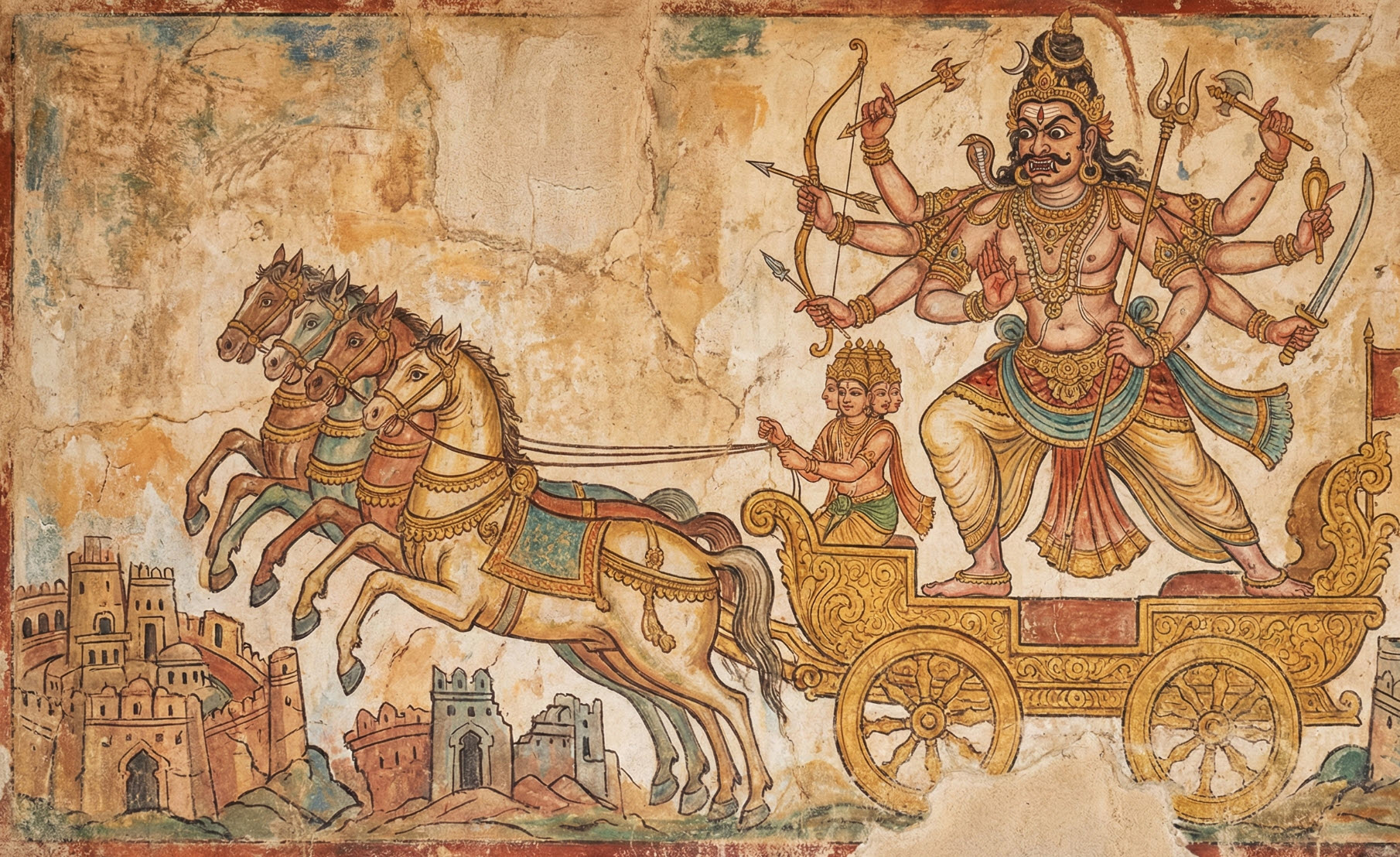
Perhaps the most imposing mural is the giant depiction of Shiva as Tripurantaka (Destroyer of the Three Cities). The painting is dynamic; Shiva is shown with a fierce expression, eight arms wielding weapons, riding a chariot driven by Brahma.
Artist's Detail: Note the ferocity in the eyes and the detailed jewelry. The use of continuous narration is evident, showing the battle sequence in a single frame.
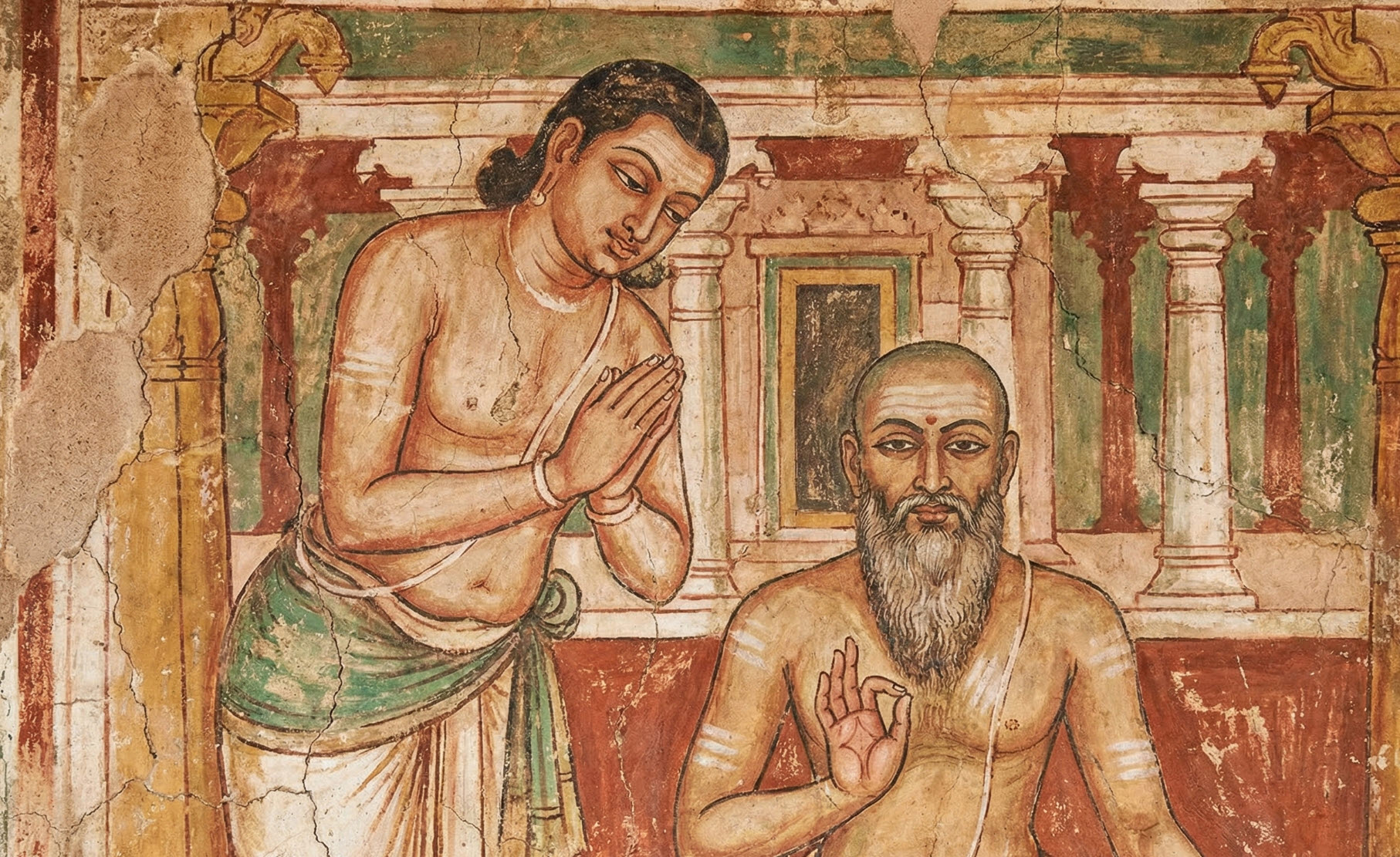
A rare secular inclusion in a sacred space. This mural depicts the Emperor Raja Raja Chola standing behind his spiritual guru, Karuvurar. The King is shown without a crown, showcasing his humility before the sage.
Historical Significance: This is one of the earliest painted portraits of a royal figure in South India, providing accurate details of Chola attire and hair styling (shikha).
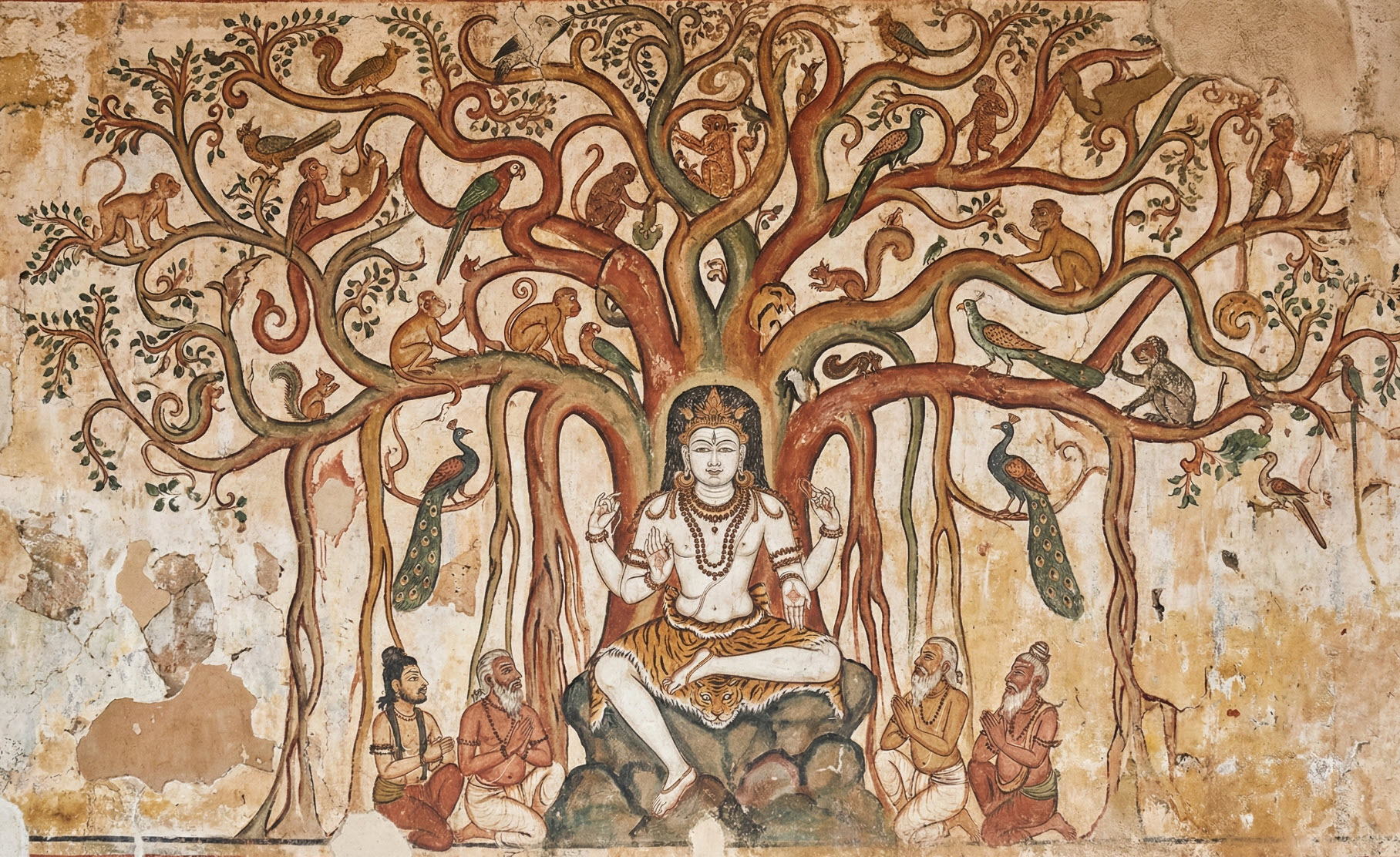
Shiva as the supreme teacher, Dakshinamurti, seated under a banyan tree. The tree itself is a masterpiece of stylization, with monkeys, birds, and squirrels frolicking in the branches, showing the Chola artist's love for nature.